Learning E-Blast July 2019

Dear, all

Our team has been hard at work in our endeavor to achieve consistency and fairness in everything we do around our people. One of our goals is to streamline our communications and deliver information to you as it becomes available.

Earlier this week, we released our updated Employee Handbook, which is readily available on the ADP portal. Next in the pipeline, our latest updates in HR policies and frameworks, such as our new Guide to People Processes and our new Compensation Framework. These guidelines will help lay the foundation on how we approach certain practices as a company, while we continue building our Employee Value Proposition.

On June 8th, we celebrated 3Sixty’s first Family Picnic. Despite the rainy weather, the event was a great success with nearly 200 attendees. Under a whimsical Carnival theme, employees and their families enjoyed an afternoon at C.B. Smith Park, full of fun activities and great food.

We are looking forward to our upcoming Town Hall meeting on Friday, July 26th, led by our new Chief Operations Officer, Alex Anson. Proceeding the meeting, we will be cascading details to our team members located outside our Miami, Headquarters.

All the best,

Federico


Also in the news…
In this section, we provide links to other articles that mention 3Sixty, impact our industry, or provide insights into leadership and development. Articles are typically chosen for their relevance to the changing travel retail landscape, leveraging the
3Sixty values of We are Innovative, and We are Visionary.

3Sixty in the News
The press announces our new COO: https://www.moodiedavittreport.com/3sixty-duty-free-more-appoints-alexander-anson-esparza-as-chief-operating-officer/

https://www.trbusiness.com/video-channel/90-second-news/trbusiness-90-second-news-update-176/166189

https://www.dfnionline.com/latest-news/alexander-anson-esparza-appointed-3sixty-chief-operating-officer-18-06-2019/

Industry News

Travel Retail Industry showing very positive forecasts for the next 4 years, driven by expected increases in disposable income and emerging travelers. Read the full article here

Thoughts on Learning & Development
How to generate the conditions for workplace collaboration? As leaders as well as colleagues, there is always a space for us to make decisions and make it happen. Read the full article here

How to increase your productivity at work, so you can be back home when you are supposed to? See some time management techniques here.

Solari Hemp and CBD promise “seed to shelf” quality control for future TR channel

http://travelmarketsinsider.net/solari-hemp-and-cbd-promise-seed-to-shelf-quality-control-for-future-tr-channel/

By: Lois Pasternak
March 21, 2019

One of the most intriguing new product categories on the horizon is the range of products in the burgeoning hemp and CBD industries.  Hemp and CBD have taken the personal care and wellness world by storm over the past few years, with myriad new product launches across all major industries.

The 2018 U.S. Farm Bill recently signed by President Donald Trump allows the transfer of hemp-derived products across state lines for commercial or other purposes. It also removes all restrictions on the sale, transport, or possession of hemp-derived products, so long as those items are produced in a manner consistent with the law.

The forecasts of the potential profits are staggering. A recent article in NACS, a trade magazine covering the convenience store industry, cites cannabis analytics company New Frontier Data, which estimates the cannabis industry could cumulatively generate $105.6 billion in federal U.S. tax.

Colorado-based Solari Hemp intends to be in the forefront of this industry and the first to bring its high-quality product range to travel retail. The effort is being spear-headed by Nick Tamma, one of the most experienced and recognized figures in the TR industry, especially in the Americas.  Tamma will be available to speak with attendees at the Orlando Summit of the Americas about the exciting potential ahead.

“Our company is aiming to be the standard setter as it relates to the hemp business,” says Tamma, who along with company CEO Kelly Michols spoke with TMI about this new industry.

Tamma and Michols explain that Solari will be producing the highest quality products throughout its range, which include liquids, soft gels, topical balms and lotions, creams, and a gummy product.

“The primarily point of difference about Solari is that we are ‘seed to shelf,’” says Tamma.

Michols adds: “We believe that being a fully integrated company is the right way to ensure quality, this means growing the hemp plant, harvesting it, extracting it, and then turning that extracted material into the products that we sell. There are very few companies that are doing this right now, but Solari is, and this really sets us apart.”

Michols, whose consumer goods background includes both nutritional supplements and tobacco, also has spent the last 4-5 years doing governmental affairs work in the tobacco industry. He admits there are many people who are creating hemp and CBD products without a full understanding of where their ingredients are coming from, which has the potential to undermine consumers’ confidence in the authenticity and efficacy of the products.

Solari knows everything about its products as they control each step of their life cycle of growing it, extracting and manufacturing the products under very stringent standards and supported by testing throughout the process. Solari tracks each plant and knows each gene type that goes into every batch of product to guarantee the efficacy of the Solari Hemp product range. Consumers can buy with absolute confidence. Solari will set the standard with its Hemp product ranges which guarantee “Solari Hemp” inside.

The company has an extensive amount of farmland in Colorado managed by farmers who are very experienced hemp growers. They deeply understand the complexities of successfully growing hemp including all the challenges that come along with harvesting the plants.

Solari will plant 150 acres this year, harvest its own product, and move it immediately into its own extraction and distillation facility onsite at the farm.

“The fact that we can have custody of every step of the process of creating our Hemp products, from the time that we put a seed in the ground to the time that we deliver the products, ensures the quality of our products for travel retail. We monitor our processes and test continuously to assure that the quality and the safety of the product are unparalleled. Solari’s goal is to always do things the right way and be the industry leader at developing standards for Hemp and CBD,” he continues.

How will this work in travel retail?

Michols says that Solari is exhibiting in Orlando to show the industry what the company can bring to the operators when their markets are ready.

“We want to be the first to bring a high-quality Hemp (and CBD product) to the travel retail industry,” enthuses Tamma.

“Vancouver, Seattle, Toronto and many of the Border Stores are just a few in a long list of operators that are eager to embrace the first mover advantage in this new category of sales. Solari is destined to be a global leader in the Hemp and CBD space, and we are excited to be at the forefront in TR and responsible for global exports,” said Tamma.

What is CBD?
According to a recent in-depth report in Cosmetics Design, CBD is one of 113 identified cannabinoids found in cannabis plants. It contains anti-inflammation properties, essential fatty acids and vitamins A, D and E, giving it a broad range of skin care applications. It contains only minute amounts of the Tetrahydrocannabinol (THC), the substance that makes one “high,” associated with smoking or ingesting cannabis. CBD has to be made from industrial hemp, and the oil generally has very low levels of THC.


Hot topic: Digital trends in Americas travel retail

Link to original article
DFNI*Frontier
By Alison Farrington

March 18, 2019

Digital is set to be a hot topic of conversation at this year’s Summit of the Americas, with retailers such as ARI, International Shoppes and 3Sixty highlighting the latest innovations in their operations to DFNI

Digitalisation is a key growth strategy cited by several major travel retailers operating in the US, with data-targeting likely to be a hot topic at the Summit of the Americas later this month.

“We want to communicate with passengers more before they travel,” Aer Rianta International (ARI) General Manager and Director, Jackie McDonagh tells DFNI.  “It is something we are passionate about and trialled in Montreal, by tailoring specific ads on social media. For example, when targeting Chinese passengers, we used artwork that was gold and premium to promote brands like Estée Lauder and La Mer. Elsewhere, when talking to US passengers we promoted maple syrup products and Canadian whiskies through digital marketing activity.

Estee Lauder x The Loop, ARI digital campaign

“We split it into different regions, such as EU, Caribbean, Chinese, US, and we had specific SKUs to promote our value message to them. We reached 8 million people in a period of five months and during this time, we saw the penetration increase.

“We are looking to explore and develop this digital strategy this year. We want to work with airlines and Expedia so that when people book a holiday through their platforms, we can talk to customers at the same time and make them aware of the offers that we have.”

Digital drives campaign performance

“Digital has been a great way to maximize campaigns to align with the influx of customers that come from different origin markets,” explains International Shoppes Vice President Matthew Greenbaum. “To be able to have Mandarin campaigns during key periods and back to English during others allows us to properly communicate the programs that are offered in the store. The digital platform gives our suppliers a great opportunity to showcase their brands to more audiences and for iShoppes, it’s a great way to promote our brand portfolio.”

iShoppes will focus on digital advertising to maximise campaigns

Placing the right brand in front of the right passenger will be a key focus for iShoppes as it expands on its strategy to target Chinese passengers in particular, through digital activity. The new JFK shopfit features Times Square-style digital installations for both vendor and iShoppes digital content and this represents how the retailer addresses one of its biggest demands in duty free spending habits – to utilise content for its most significant category.  “Beauty continues to be a strong spot in our store and we are focused on bringing the latest and greatest brands to the market. 18 months after we completed JFK T1’s 7,200 sq ft beauty storefit we are already renovating 20% of the store to introduce newness through digital,” says Greenbaum. “Ease of transacting is also important. We’ve invested further in our pre-order website to facilitate pre-travel purchases and have partnered with Citcon to offer payments from WeChat, AliPay and China Union Pay.”

Inflight opportunities driven by digital

DFASS recently rebranded itself as 3Sixty, with the view of having a name that reflected the full spectrum of its retail offer. The reveal of an additional online platform created in association with e-commerce specialist AOE is evidence of this. The new digital initiative, which will initially be rolled out on  in Colombia, Aerogal in Ecuador, TACA in Peru and LACSA in Costa Rica, will see duty-paid and duty-free goods offered for pre-order with onboard and ground-based deliveries available. Under the initial agreement, the platform will be offered on up to 6,000 weekly flights to more than 100 destinations in 27 countries.

3Sixty is partnering with Avianca for inflight e-commerce

“Consistent with our vision, we are continuing to innovate in the travel retail industry and to put consumer experience at the heart of our strategy,” 3Sixty Executive Vice Chairman Roberto Graziani said. “The latest development with the Avianca Holdings airlines in the Americas offers more than 30 million passengers state-of-the-art technology and the convenience of having our duty-free goods delivered at home or onboard our airline partners.”

3Sixty says it plans to focus on digital solutions for the evolving market. “The consumer is using their mobile devices to engage more and more with retailers and brands – gathering information and advice, pre-shopping and transacting. It is important in travel retail to engage with this customer both digitally and in-store,” says Donna Maxwell, SVP of Global Retail Operations.” 3Sixty utilizes in-store digital activations and communications in our Dallas Fort Worth main store and will be adding these and new activations in other locations going forward. In addition, the connection to our omnichannel solution recently announced for Singapore Airlines Group and Avianca takes our industry-leading inflight business to the next level. We have ambitions to link our omnichannel platform with our airport business.

“While enplanement continues to grow in most markets, one of the biggest challenges we face is the constant gate movement of key international flights in many airports. As a result, engaging with the passenger from their mobile device becomes more important to capture those passengers who may never walk past our stores,” says Maxwell.

Leveraging digital to talk to tech-savvy Millennials

A key challenge for all stakeholders in the global travel retail business is to develop concepts that appeal to tech-savvy, Millennial travellers. In this key area, Paradies Lagardère plans to learn from its recent technological advancements, applying a digital lens to future projects, according to Gregg Paradies, CEO and President of the company.

Paradies Lagardère has revealed plans for a transformed retail offer at the new $3.6bn Salt Lake City (SLC) Airport, being built in the mountainous US state of Utah and due for completion in 2024. One of Paradies’ highlights is the new TripAdvisor retail concept that features a touchscreen that allows travellers to research Salt Lake City and the surrounding area.

Digital screens feature in the Trip Advisor retail concept at the new Salt Lake City airport, operated by Paradies Lagardère

VR engagement

Paradies Lagardère made headlines last year when it opened a virtual reality (VR) Experience Center in New York JFK T4. With 70,000 passengers passing through the terminal every day spending an average of three-to-four hours to catch their flight, the self-serve towers allow users to escape to virtual worlds to explore an undersea world or deep space, or even build, sculpt and paint their 3D creations.

Paradies says the initiative was an industry first. “The response from travellers has been overwhelming. PeriscapeVR is the first-ever permanent, interactive virtual reality centre of its kind in an airport. The ground-breaking VR experience centre at JFKT4 combines expertise in luxury, retail, original content, and technology, and offers travellers an interactive and blissful escape.

PeriscapeVR’s Experience Center in T4’s retail lounge features freestanding VR Towers with 12 stations. Pricing ranges from $1-$2 per minute and the experiences average approximately five to 10 minutes each. The stations also offer secure compartments for storing luggage and personal items.”

PeriscapeVR’s experiences are grouped into five content categories: first time, experience, create, play, and cause,” Paradies adds. “Designed by world-class Gensler Architects and powered by Hewlett-Packard, the luxurious space provides travellers with the opportunity to escape within a virtual wonderland. I definitely see the potential for this in other airports as the drive is to enhance the customer experience.”

The PeriscapeVR Experience Center, JFK T4, operated by Paradies Lagardère

As highly successful as the PeriscapeVR activation has been at New York JFK, Paradies is keen to point out that the company is not interested in developing high-tech concepts just for the sake of being perceived as ‘cool’ and ‘innovative’.“Paradies Lagardère has a plan for incorporating innovation and technology into its concepts. We’re going to pick the right technology, that is building an IT infrastructure for the long term that can be built upon vs going for flash in the pan coolness; We’re going to make sure we have the skilled labour necessary to succeed in an increasingly sophisticated technology environment; and we’re going to work to stay current in the face of ever changing technological innovations.”

Mobile payments

Mobile payment is one of the more prosaic technological services Paradies Lagardère is now providing at many of the new stores it operates. “We continue to offer travellers enhanced efficiency and speed in their transactions through options such as Apple Pay and apps such as Grab, which allow travellers to pre-order meals on the go,” explains Paradies. Introduced initially in 2016 at Pittsburgh and Denver international airports and then expanded to other airports, the Grab smartphone app allows users to place meal orders and pre-pay from their smartphone, while collecting their items from special pick-up areas. The app features restaurant menus, as well as concourse maps and special offers.

Report by DFNI Editorial Team


Vital importance of travel retail exclusives underlined in new consumer study

by Jason Holland
Source: ©The Moodie Davitt Report

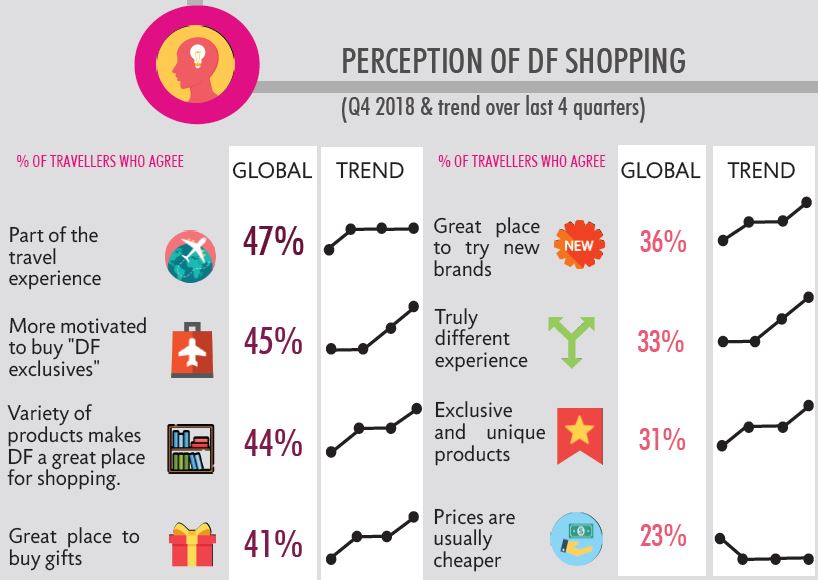
The latest report shows that global shoppers are more motivated to buy exclusive items in duty free stores, up 2% on the previous quarter, and with 45% of shoppers agreeing with the statement.

The results are in keeping with a recent major feature on travel retail exclusives in The Moodie Davitt eZine, which canvassed the opinions of retailers, brands and consumers. Topics discussed in the feature include language, communication, store positioning and the factors that determine a successful exclusive product.

DFWC’s KPI Monitor was compiled through interviews conducted by Swiss research and consultancy agency m1nd-set with more than 4,000 international travellers across all world regions during December.

The results showed that travellers had an improved perception of duty free shops as ‘a great place to try new brands’, to enjoy a ‘truly different experience’, and to find ‘exclusive and new products’.

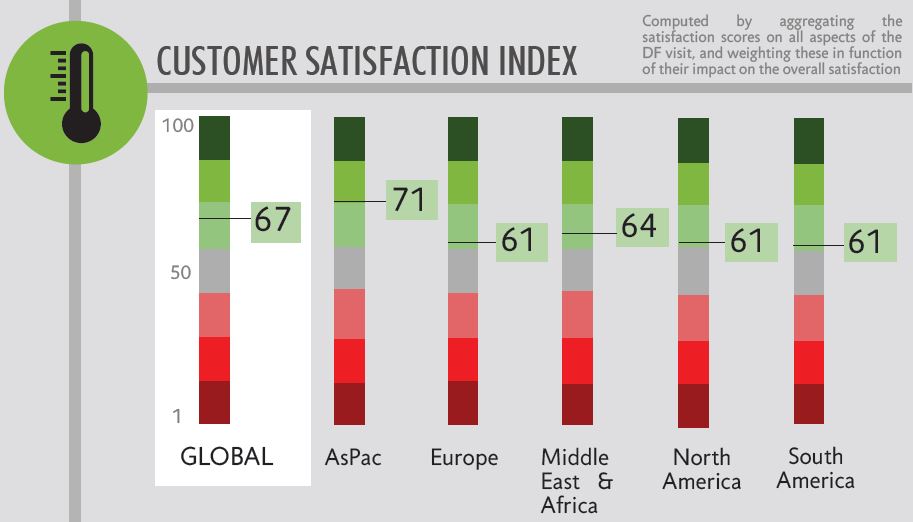
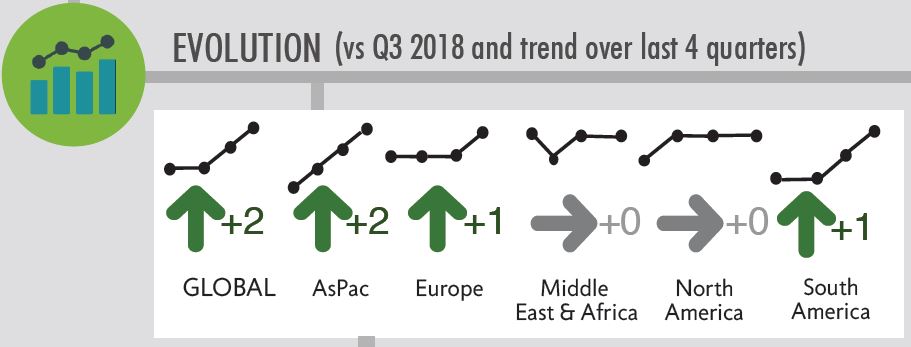
The overall customer satisfaction index shows a global increase of two points on the third quarter of 2018, with the highest increase in Asia Pacific (+2), which is also the best performing region. Europe and South America both saw a one point increase in the global index while the Middle East and North America showed no change.

DFWC said the importance of exclusives was further underlined by the increasingly positive perception about the variety of products and how this makes duty free shops ‘a great place for shopping’. This perception improved 2% versus the 2018 Q3 Monitor.

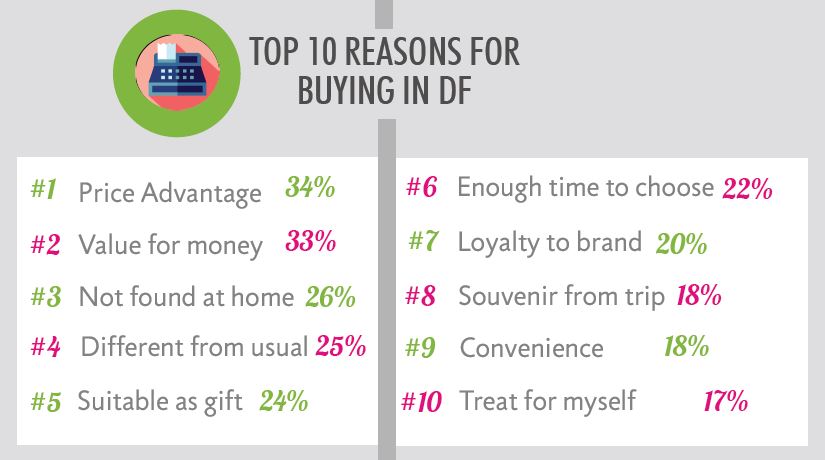
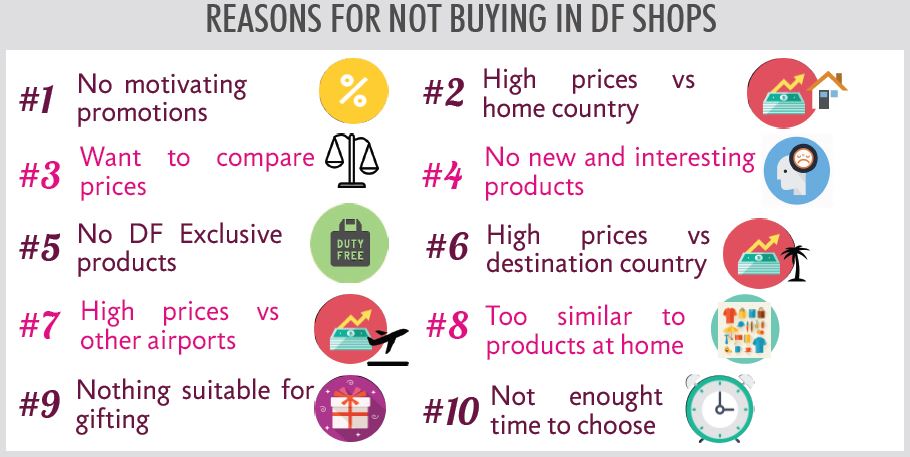
After price advantage and value for money, the key reasons for buying in duty free shops are because the products are ‘not found at home’ and are ‘different from usual’, according to the report. ‘No duty free exclusives’ also moved into the top five reasons for not purchasing in duty free shops.

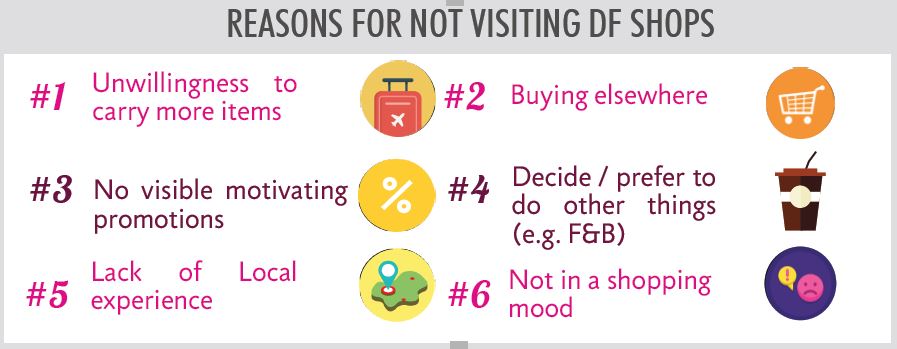
On a similar note, ‘lack of local experience’ was cited as the fifth main reason for not visiting duty free shops, suggesting that some travellers perceive duty free offers to be too similar.

Commenting on the findings, DFWC President Frank O’Connell said: “The time of year is clearly a contributing factor to the importance of exclusives, with brands and retailers pushing the exclusives and travel retail exclusive gift offers during the festive season. For both western travellers for Christmas and Chinese travellers purchasing ahead of the Chinese New Year period, travel retail exclusives are key purchase drivers at this time of year.

“If we look at the impact of the qualitative aspects on the overall perception of the duty free shopping experience as well as value for money, we see that ‘uniqueness of products/services’ is the second most impactful aspect on the satisfaction levels among global duty free shoppers.”

M1nd-set CEO and Owner Peter Mohn added: “It is vital for brands and retailers to offer a clear price advantage in duty free shops as this is what customers look for first and foremost, and uncompetitive prices remain the main barrier to visiting and purchasing in the channel.

“However, there are increasingly important expectations around the uniqueness of the offering and experience. A growing number of duty free shoppers are buying products which they have never bought before or which are unique and exclusive to duty free.”

Why Travel Retail Needs an Upgrade

BCG.com September 4, 2018
By Filippo Bianchi , Gabriele Ferri , Stefano Minini , Ivan Bascle , Patricio Ramos , and Hean-Ho Loh

As the number of air travelers has surged in recent years, so has the amount of shopping that they do in airports. But while the so-called travel retail market has tripled in size since 2002, the rate at which passengers are spending has slowed over the past five years. To reverse this decline, airports, airlines, retailers, and brands will need to work together in innovative ways.

Some of those players are already launching ventures to boost performance, both in the airport and in the air. Among the most recent examples, Kuala Lumpur International Airport is building an integrated big data platform to support operations and provide real-time information to customers and airport operators; it will also facilitate passenger access to retail with features such as click and collect, where passengers buy products online that are subsequently delivered to their gate prior to boarding. In another venture, Singapore Airlines and duty-free operator DFASS have partnered with SATS, a gateway and food services provider, to convert onboard catalogs into an omnichannel e-commerce
experience.

While such efforts are a step in the right direction, companies need to do more than launch standalone initiatives or even individual joint ventures. They must join forces to create a travel retail ecosystem through which they can share data about passengers’ schedules, purchasing behavior, and other related insights, and use that information to offer passengers a compelling shopping experience at every step of their journey.

MORE PASSENGERS—AND MORE CHALLENGES

Over the past 15 years, the combined revenue of travel retail markets around the world has grown at a CAGR of 8.6%, at least twice as fast as any other offline retail channel. Today it stands at nearly $70 billion. (See Exhibit 1.)

Asia-Pacific travel retail in particular has exploded, with a CAGR of 14.4%. After surpassing Europe in 2011, the region currently accounts for almost half (45%) of global revenue.

Airline passenger growth has provided a major tailwind for the growth in revenue. During the same 15-year period, the number of global passengers increased by 5% year over year. (See Exhibit 2.) And travel retail is likely to expand even further: according to the International Air Transport Association (IATA), the number of passengers will double between 2016 and 2035.Until recently, revenue growth was also driven by an overall improvement in product assortment and the customer experience. Spending per passenger rose throughout the first decade of the 2000s, peaking globally in 2013, but has declined ever since. (See Exhibit 3.)

Both the growth in the number of passengers and the slowdown in spending per passenger need to be viewed against the backdrop of a transforming aviation industry. The emergence of low-cost carriers (LCCs), shifting demographics, and the growing impact of new regions are changing the face of aviation—and presenting new challenges for travel retail.


Low-cost carriers are on the rise.
 With their competitive prices, LCCs are enabling new consumers to enter the aviation market; these carriers now claim up to 35% market share in key regions. By expanding into secondary airports, they have also opened up new markets for travel retail. Since the arrival of Ryanair in 2002, for example, the number of passengers at Milan’s Orio al Serio International Airport has grown from 1 million to 11 million a year, a growth rate six times faster than that of other airports in the region. And in keeping with their lean operating model, LCCs take a digital-first approach when it comes to things like booking and checking in for flights.

But while LCCs can help to stimulate further growth in travel retail, other carriers will need to tailor their offerings to the needs and priorities—and the spending patterns—of the new LCC customer base as well. This could involve, for instance, increasing food and beverage offerings rather than retail products or focusing more on mass-market chains instead of luxury retail. LCC-focused airports need to accommodate the airlines’ operational-efficiency requirements while maintaining the service quality expectations of their travel retailcustomers.

Market demographics are shifting. Aviation demographics are also undergoing substantial changes, with new age groups taking center stage. A BCG study on the evolution of travel habits found that, by 2020, millennials (those born between 1980 and 1994) will account for 46% of business trip spending in the US, an 11% rise from 2013. (See Traveling with Millennials, BCG Focus, March 2013.)

To stimulate the buying power of millennials, travel retail will need to leverage digitally driven, omnichannel, and loyalty-based platforms. Meanwhile, baby boomers (those born between 1946 and 1964) and members of Generation X (born between 1965 and 1979) will increasingly retire and spend more time traveling. Travel retail will need to provide those groups with convenient offers that appeal to their respective socioeconomic and demographic profiles in order to stimulate impulse purchases.

In addition to these generational changes, the number of affluent and free independent travelers (those who travel on their own, not in prearranged group tours) will also rise.

New regions are coming into play. More travelers are coming from the Middle East and Asia-Pacific, at a rate almost twice that of visitors from Europe and the Americas over the past ten years. When it comes to Chinese travelers, traffic is expected to increasingly come from outside the four tier 1 cities (Beijing, Shanghai, Guangzhou, and Shenzhen); consumers from tier 2 and 3 cities will drive consumption patterns that reflect the relative immaturity of those local retail markets.

In the meantime, the growth of global GDP has transformed large sections of major countries such as India from low- to middle-income status. And according to the IATA, once people have more disposable income, they tend to spend more on travel.

TRAVEL RETAIL REMAINS FRAGMENTED

Between February and April 2018, BCG in partnership with the Tax Free World Association (TFWA) conducted in-depth interviews with more than 20 senior managers at airports, airlines, retailers, and brands in three regions (North America, Europe, and Asia-Pacific). All managers agreed that, by operating in silos, key industry players limit the value they can deliver to customers. Rather than sharing information about passengers and coordinating to provide them with the most compelling offerings in the most appealing environment possible, travel retail players continue to go it alone in a fragmented market.

Integration is limited along the customer journey. Every point along the customer journey provides a buying opportunity. And airports and airlines have an unparalleled amount of real-time information about passengers as they make those journeys, from their age and nationality to their present and future locations. By not giving retailers and brands access to that data, they lose the ability to target customers with personalized offers.

Conversely, many retailers and brands don’t have the infrastructure to collect such data. Those that do gather information tend to focus on customer demographics, preferences, and buying patterns. But competition for concession contracts is fierce, and retailers and brands view their customer data as a source of competitive advantage. Rather than sharing the information, they keep it to themselves.

Players’ priorities conflict. On the basis of experience with an airport in Asia-Pacific, BCG has found that the amount of money passengers spend can increase by up to 2.5% for every extra minute they’re in the retail area. But security processes and airlines’ gate allocation, preboarding, and boarding requirements limit the amount of time passengers can spend browsing. (And free Wi-Fi means that many passengers stay away from the retail section altogether, choosing instead to sit in leisure areas and use their phones or laptops.) Another notable source of friction is related to the cabin allowance. A TFWA survey of nonshoppers indicated that 8% are uncertain about what they’re allowed to bring onboard (whether related to regulations or airline-imposed restrictions), which is one reason they don’t make a purchase in the retail area.

Quality is compromised, and assortments are limited.Contracts between airports and retailers tend to be short in duration, have razor-thin margins, and place the lion’s share of risk—such as fluctuating airport traffic levels and the inconsistent revenue stream that can result—onto the retailer. The result is that retailers must compromise on product quality and customer service. But TFWA found that the lack of value and selection were among the main reasons travelers didn’t make purchases.

Low margins and tight contract durations also force retailers to minimize their investments in new products and formats. Brands are subsequently unable to deliver their full array of assortments and pricing options to customers.

STANDALONE IMPROVEMENTS GENERATE ONLY INCREMENTAL VALUE

Airports, airlines, retailers, and brands are making notable changes to accommodate the shifts in passenger demographics and priorities. But individual improvements will take them only so far. They need to consider—and support—passengers’ entire travel experience.

Airports need to win market share by focusing on quality.Airports are increasingly looking for ways to generate revenue from nonaviation sources such as travel retail. Indeed, travel retail is a vital element when it comes to delivering a competitive experience, particularly for airports competing on premium routes. Improving terminal offerings helps attract new carriers and, with them, more passengers. But BCG research shows that more than 20% of passengers are still unhappy with the airport commercial area. Passenger complaints vary across airports, with the most common being poor Wi-Fi connections, dissatisfaction with the food and beverages available, and difficulty finding their way around.

Airlines need to offer more, and better, selection. In the face of strong pressure on profits from LCCs and other competitors, all carriers have been developing lean operating models—often to the detriment of travel retail, both onboard and in the airport. For example, in an effort to improve operational effectiveness, such as by reducing turnaround times and imposing one-bag carry-on limits and other constraints, airlines have also cut back on both the quality and the variety of products available to buy while in the air, causing growth in onboard retail to stagnate. Instead, they should be looking to partner with retailers to offer items that can be purchased during the flight and picked up upon landing.

Retailers need to focus on customer convenience and new formats. While leading travel retailers have consolidated to strengthen their financial performance, they could do more for the customer, such as making the shopping experience more convenient by offering click-and-collect systems or by enhancing loyalty schemes through vertical integration with airports and brands. Retailers could also improve their in-terminal formats, investing in innovative layouts and further distinguishing their product offerings from those of traditional retail channels.

Brands need to differentiate their offerings and formats.Brands are also refining their approach to travel retail—for example, by considering it as a separate channel and dedicating departments to it. Pricing strategies and customer service could be further improved, however, as could format innovation, even in a constrained environment such as the airport. One example is the new Louis Vuitton store in Singapore’s Changi Airport; opened in late 2017, it is the first LV airport store in Southeast Asia and features, among other things, a glass and copper-diamond mesh surface and a digital LED display at the entrance.

BUILDING A TRAVEL RETAIL ECOSYSTEM

Travel retail’s ability to provide the customer with a compelling shopping experience while meeting the strategic challenges of new markets, changing demographics, and competition from online retail will hinge on how quickly and effectively airports, airlines, retailers, and brands can work together. By moving past their current silo mentality, they can create a travel retail ecosystem that makes personalization and integration core features of the passenger experience.

Industry players can take a number of steps toward creating such an ecosystem. These actions are grounded in two guiding principles: a renewed focus on the customer and the establishment of a value-based platform for cooperation and collaboration.

Use data to provide the customer an integrated experience.Convenience—in both price and delivery—as well as immediacy are two of the primary reasons online retail is so successful, and together, they give it a competitive advantage over today’s travel retail offerings. One way the travel retail industry can fight market erosion from online competition is to match the convenience and immediacy that online provides. Travel retail should enable purchasing at every stage of the customer journey, from booking and other pretravel activities, to time spent in the airport, to in-air travel—all the way through to after deplaning. A strong partnership among industry players, which a third-party technology provider could help to anchor, is critical. But the success of any technology platform will depend on its ability to integrate data from all players regarding products and services that can be offered along the traveler’s journey. (See the sidebar.)

Airlines (and their data) are a critical component of the ecosystem. They can play a role in increasing the value of the travel retail market in three ways, starting with passenger data. Unlike airports, retailers, or brands, airlines are the main point of contact with passengers. As such, they have an unparalleled amount of knowledge about their customers, which they’ve used to develop competitive pricing policies and precision-marketing strategies. And they could take this even further—for example, by offering customer information such as ticket fare class to retailers for use when marketing travel retail products. This data could be shared in exchange for transparent transaction fees.

Another way of increasing travel retail revenue is for airlines and retailers to form joint ventures to create digital platforms that complement onboard service. For example, Singapore Airlines and travel retail operator DFASS signed a joint venture agreement with gateway and food services provider SATS to move the catalogs they provide to passengers in the air onto an omnichannel e-commerce platform. With such agreements, retailers can expand their ability to reach customers, and airlines can shore up any limitations in their product offerings while still maintaining operational efficiency.

In addition, airlines could allow a wider variety of goods to be promoted during check-in and at the booking stage. And they could provide complementary onboard travel retail services. For example, the online brand REWE is trialing an onboard grocery-shopping offering with Lufthansa that allows passengers on selected long-haul flights to shop for products that can be delivered once they arrive home.

Enhance the customer experience, from terminal planning to in-store execution. The travel retail industry should focus on building differentiated offerings that deliver a surprise effect. For example, in early 2018, Tiffany used its iconic blue packaging to draw passengers to its pop-up store in John F. Kennedy International Airport’s Terminal 4.

Excellence in customer experience starts with retailers and airports sharing a common understanding of the core principles that govern terminal design and passenger acquisition strategies. For example, when planning a terminal expansion, operators of one European airport engaged heavily with their commercial partners to establish criteria for space allocation and passenger flows. Engagement with large retailers started four years before the terminal opened; with select luxury brands, engagement began two years before it opened.

When it comes to operations, travel retail needs to be flexible enough to respond to changes in the number of passengers in different locations and at various times of the day in order to maintain profitability. One example is the integrated big data platform that Kuala Lumpur International Airport is deploying for its KLIA2 terminal. The platform will pull in data about passengers’ real-time locations throughout the airport so that services and supports can be adjusted to seamlessly accommodate fluctuations in passenger flow. Airports can also use big data and analytics to better manage resourcing, parking congestion, and in-terminal retail assortments.

The first steps toward this transformation have already been taken. Brands and retailers are developing new formats by using technologies such as video and augmented reality. They’re also embarking on enhanced partnership agreements with airports to create new formats, such as pop-up shops, that can occupy unused terminal space while providing novelty to travelers.

Refocus on the customer with tailored products, pricing, and promotions. Retailers and brands must further integrate around products to deliver differentiated offerings, starting with a shared understanding of customer demographics and purchase patterns.

According to Swiss travel retail research firm m1nd-set, the top two reasons Chinese consumers say they buy duty-free items are that they offer good value for money and a clear price advantage. With that in mind, the travel retail industry should exploit the price advantage offered by tax exemptions on core categories. That will allow them to compete with prices found elsewhere, whether online, downtown, or at the passenger’s destination, especially given that those other prices can be discovered with a simple web search. One solution—already widespread among e-commerce retailers—could entail the introduction of dynamic-pricing policies to match those of the competition.

The industry can also take advantage of airports’ intrinsic data richness, pooling customer information with real-time data to further tailor promotions and marketing campaigns. An example is the data-driven advertisement initiative jointly developed by Dubai International Airport, Dubai Duty Free, and JCDecaux. Together, they created a marketing ecosystem that integrates all their data to optimize ad scheduling, boosting the efficiency of campaigns. Retailers can change their artwork every 15 seconds using different languages and promotions according to the time of day and the expected passenger flows in the airport.

THREE WAYS TO START WORKING TOGETHER

To help airports, airlines, retailers, and brands craft their next steps, we offer three business model archetypes for partnerships that could provide the foundation of a travel retail ecosystem.

A Data-Driven Marketing and E-Commerce Platform

The industry could partner with a third-party technology provider to create an integrated, data-driven global-insights platform that could increase the number of marketing opportunities by focusing on customer outreach before travel starts and on convenience both during and after the journey.

All industry players would share data about their customers—from their age and nationality to their brand loyalty status—in a way that complies with privacy regulations. The platform would systematize and orchestrate the exchange of that data in return for a fee. For increased impact, the ecosystem could be extended to include, for example, hotels, parking operators, and online travel agencies.

The platform would then feed into a second, commercial platform that enables comarketing activities among airlines, airports, brands, and retailers. Given their natural connection with the customer, airlines and brands would serve as the touchpoint channels, while retailers and airports would provide the right assortment, resources, and areas for the comarketing activities.

The platform could be used to push targeted airport retailer promotions when the customer is engaged with the airline, either at check-in online (such as discounts on family meals or parking promotions) or while onboard (for example, a click-and-collect system at the gate during a stopover). Brands could also leverage the platform to increase the span of services they offer customers, such as the ability to collect or return items purchased online during a forthcoming airport visit.

Similar platforms are already being developed in adjacent markets. One example is Journera, a back-end data platform that collects passenger information from participating travel partners to provide a single, real-time snapshot of passengers that participants can use to offer a customized experience. For example, a hotel operator could see that one of its guests landed ahead of schedule and offer an early check-in time.

A Passenger Control Tower

Today, passenger flows are static and operations-driven. Airports allocate gates on the basis of customs officer availability, aircraft turnaround times, and ground handling requirements, for example. To give passengers a better experience while maximizing the amount of money they spend, airports could work with airlines, retailers, and brands to develop a digital passenger control tower. (See Exhibit 4.)

This tool would take data from multiple sources (retailers, airlines, airports, and data streams produced through passengers’ digital devices via airport Wi-Fi) and pertaining to multiple fields—from passenger purchasing preferences to flight departure times. Using this data, the system would then provide real-time passenger information to retailers, such as point of origin or destination, and would optimize a series of airport-critical operations that would help to direct passenger flow. For example, the system would dynamically redesign gate allocation in order to maximize passenger exposure to the retail areas most appealing to them.

Airports would need to lead the development of this tool, setting criteria and providing the operating resources. Robust data platforms and innovative partnership agreements would be especially important because success would depend on airlines sharing their passenger information, brands and retailers defining their potential interest, and airports dynamically allocating suitable gates while ensuring that minimum levels of operational service are fulfilled.

Small-scale mockups undertaken for specific airports have already shown that such tools can deliver significant increases in spending per passenger.

A Personalized Pricing and Assortment Tool

Today’s customer wants personalization and special treatment on the basis of loyalty. Moreover, travel retail customers are rational in their purchase decisions and often compare prices online even while in airports. Retailers can take the lead in improving customer personalization by devising a real-time, personalized pricing and assortment tool.

The system would leverage the intraday difference in passenger mix as well as the inherently data-rich environment of the airport to optimize and dynamically offer pricing, promotions, and assortments. The ultimate objective of this type of system would be to reorient the product mix, increase spending per ticket, and generate more impulse purchases. Such a tool would be especially helpful during an economic downturn, when spending per passenger needs to compensate for any shortfall in the number of travelers.

For input, the system would require airport information, such as flight schedules and the position of passengers in the retail area using beacons and Wi-Fi, consumer brand preferences, and third-party information such as downtown benchmark prices or the weather in a destination city. For example, the system could optimize duty-free prices and special offers at an airport in Antalya, Turkey, prior to the departure of an evening flight to Russia in order to align with prices in downtown Moscow and the categories preferred by Russian consumers.

Online retailers already make plenty of daily adjustments to prices as well as to promotions, and similar experiments are also taking place in many brick-and-mortar retail stores. To achieve comparable results in the airport environment, retailers would need to coordinate their efforts and—most important—they would have to invest in adapting their systems to dynamic pricing, all of which would require that they revise the compensation terms of their concession contracts.


The travel retail industry has experienced exceptional growth over the past 15 years. But while an increase in the number of passengers has been a major tailwind, airports, airlines, retailers, and brands have contributed to the development of the sector as well. In the past five years, however, signs suggest that the market is reaching a turning point, with travel retail spending per passenger dropping in all regions around the globe.

To reverse that decline, airports, airlines, retailers, and brands need to abandon their current silo approach and instead create a travel retail ecosystem. Only by sharing information, aligning operational priorities, and integrating along the entire customer journey can the travel retail industry reverse the current falloff in passenger spending and stave off any further declines.

World exclusive – China Duty Free Group and Alibaba sign far-reaching strategic alliance

Source: ©The Moodie Davitt Report

CHINA. In a major industry development, e-commerce giant Alibaba Group and China’s most powerful travel retailer, China Duty Free Group (CDFG), today signed a memorandum of strategic cooperation, The Moodie Davitt Report can exclusively reveal.

The landmark signing took place at Alibaba Group’s Hangzhou headquarters. Underlining its importance, the ceremony was attended by Peng Hui, General Manager of CDFG parent company China International Travel Service Co and Zhang Yong, CEO of Alibaba Group.

CDFG President Chen Guoqiang (Charles Chen) and Zhao Ying, Head of Alibaba Globalization Leadership Group signed the cooperation agreement.

The two parties said they will establish a “long-term, stable and mutually beneficial strategic partnership”, and create a duty free cooperation through resource sharing and complementary services. Together they will deliver a new model in travel retail and tourism shopping, they pledged.

Chinese travel retail giant CDFG has over 240 duty free shops, including those in major international and regional airport hubs in Beijing, Shanghai, Guangzhou and Hangzhou on the Mainland, and Hong Kong International and Macau airports elsewhere in China.

CDFG also operates the world’s largest duty free shop, the acclaimed Sanya International Duty Free Shopping Complex on Hainan Island.

Alibaba Group is one of the world’s leading internet, e-commerce and digital companies. Its businesses include its core e-commerce platform, cloud computing, digital media and entertainment, and a host of other innovation projects. It has built an ecosystem around its own platform and business spheres, covering a range of consumer and business activities.

Transforming and upgrading the tourism experience

Through strategic cooperation, CDFG and Alibaba said they aim to build “a new tourism retail ecosystem” based on their respective strengths and services and enhance the tax and duty free consumer experience.

At the signing ceremony, Peng Hui said that this strategic cooperation is not simply a commercial decision based on resource sharing and a strong alliance. It also represents a strategic choice to adapt to an evolving marketplace and seize the opportunity to transform and upgrade the tourism experience, he commented.

“The signing of the strategic agreement fully demonstrates the desire and sincerity of this mutual cooperation, and we are confident in the prospects for future partnership.” Peng said. “I hope that this will be an opportunity to further promote a deeper and higher level of cooperation with Alibaba.”

Charles Chen noted that many of Alibaba Group’s businesses are aligned with CDFG’s strategic direction. “The combination of duty free retail, an increasingly popular form of shopping in recent years, and Alibaba’s ‘new retail’ model will usher in excellent development opportunities,” he said. As a unique sector of the tourism industry, travel retail & duty free will also bring benefits to Alibaba’s ecosystem, he commented.

CDFG and Alibaba have committed to carrying out a “comprehensive and in-depth strategic cooperation” across a range of areas, including e-commerce, membership, big data, and logistics, Chen said.

“We will fully utilise the resource advantages and industry status of both parties, deepen our cooperation and promote industry progress – and work together to create a new duty free experience for consumers.”

“Technology and commerce are being combined at an unprecedented rate”

Alibaba Group CEO Zhang Yong (a former CEO of Taobao and President of Tmall) said that the emergence of a more service-oriented culture, allied to rapid technological development, has driven the travel market away from a price-led approach to one based more on intrinsic value and experiences. There is increasing demand for linkage of services across the travel chain and an upgrading of the consumer experience, Zhang noted.

“Technology and commerce are being combined at an unprecedented rate,” he continued. “With the increasing popularity of outbound travel, duty free shopping has become an ever-more popular form of shopping for tourists.”

Strategic cooperation with China’s largest duty free retailer combines Alibaba’s digital capabilities with CDFG’s industry strengths, he continued. This will allow the parties to jointly explore digital and intelligent forms of tourist retailing, and bring consumers a new model of travel shopping.

Joint online and offline promotions and collaborative marketing

Under the terms of the agreement, CDFG’s offline duty free store operation will be combined with Alibaba’s Feizhu online travel platform and the e-commerce giant’s third-party online payment service. This will jointly build a new tourism ecosystem with online and offline integration to maximise the consumer experience, the two organisations stated.

Simultaneously, the two sides will also implement wide-ranging marketing cooperation. This will involve a mutual opening up of each players’ membership systems to allow extensive joint online and offline promotions and collaborative marketing designed to bring consumers a wide range of benefits and incentives.

Alibaba Group and its cloud computing subsidiary Alibaba Cloud will provide digital cooperation in creating an omni-channel business structure and a global marketing approach. This will lead to the creation of a full-channel business centre and data centre.

“We will continue to explore and innovate, and create a new model of duty free and tourism shopping.” – China Duty Free Group and Alibaba Group.

As the only duty free retailer in China with a Customs-supervised logistics network covering the whole country, CDFG has established six major Customs-supervised centres in Dalian, Qingdao, Shanghai, Shenzhen, Sanya and Hong Kong. In order to better promote the integration and development of its international business, CDFG said it will cooperate with Alibaba’s logistics operations and actively explore supply chain cooperation opportunities both domestically and internationally.

In a concluding statement, the two organisations said: “This strategic cooperation is a strong alliance between CDFG and Alibaba Group – two industry leaders. In addition to the cooperation already mentioned, in the future the two sides will actively seek new business integration areas, through an all-round and in-depth cooperation and digital technology application.

“We will continue to explore and innovate, and create a new model of duty free and tourism shopping. We will jointly provide convenience and technology to shape a shopping experience that will further meet consumer needs for an enhanced and personalised experience.”

Alibaba Breaks Double 11 Single’s Day One Day Retail Record

Alibaba Breaks Double 11 Single’s Day One Day Retail Record

Alibaba’s iconic anti-valentine Single’s Day event is growing up. In 2018, it hit a gross merchandise value (GMV) of over $30.8 billion in sales in the 24-hour shopping event.

It grew in 2018 YOY 27% compared to 39% in 2017 with a total of 213.5 billion yuan. In its 10th edition this year, it’s becoming more known now as ‘double 11’, since it is held on November 11th (11.11) each year. JD.com also participates and this year went to Thailand in a big way. The $30.8 billion in sales is just for Alibaba. I’m a bit eager to see all told how much Chinese retailers managed this year.

The annual retail celebration is now the biggest one-day retail event in the world and is growing at a rate that demonstrates the supremacy of the Chinese consumer and its influence on Asia at large.

While the Chinese Yuan is down, China’s consumers don’t appear to be any less eager to participate in Double 11. JD.com itself generated $19 Billion in 2017 and, with advanced logistics and global expansion, they could eventually catch up to Alibaba especially in global markets. JD have a significant chance of bringing Single’s Day as a retail event to the U.S.

In China there will be 30 million more men than women by 2020, so double 11 has a very weird connotation. Alibaba has combined its physical retail play with Hema into yet another way to scale the event.

Still, if Chinese retailers are becoming tech companies Alibaba, JD.com and Pinduoduo deserve more attention. The $30.8 billion that was generated in sales is a significant increase from 2017 when customers spent $25.3 billion. It’s hard to even fathom a $5 Billion increase in a one-day event. It’s also connecting Asia in ways that show it’s far superior in E-commerce to the rest of the world. This is retail convenience at a whole new level.

It may not be a popular idea, but it’s also making one question the relevance of the American consumer. For comparison, the total online sales on Black Friday reached $5 billion in 2017, according to Adobe Analytics data. Cyber Monday sales last year reached about $6.6 billion. For all intents and purposes, Black Friday has shrunk in physical in-store traffic, and E-commerce has disrupted it, not necessarily in a positive way.

Since not many Western retailers participate, it’s an epic lost opportunity for the American consumer. Not many online retailers in the US are participating in Double 11, even as the event goes global further down in South East Asia and even in Europe and Russia. America is in a sense living in a bubble, where trade wars can be implemented and a “me-first” attitude is leaving the country behind.

According to JD.com’s twitter:

  • It made RMB 159.8 billion which is USD $22.97 Billion. If that’s true it means Single’s Day is really worth at least $53.77 Billion. That’s ten times as much sales as Black Friday in the U.S.
  • Few Americans have even heard of JD or Alibaba, but both companies technologically are innovating at a faster pace than most American retailers including, I believe, Amazon.

Alibaba will be more dominant in the Cloud and with smart speakers than Amazon is with AWS and Alexa in the U.S. This is because the combined innovation of Baidu, Huawei and Xioami isn’t moving as fast as Google is with its Google Home devices that have a stronger AI with Google Assistant (Duplex, etc…). This essentially means Alibaba is becoming Amazon faster than Amazon can do everything it wants. Alibaba also leads Amazon in physical retail initiatives.

Yet Amazon’s stock on the NYSE is worth more than 10x Alibaba’s (BABA).

Airline Passengers Welcome More Digital Solutions to Common Travel Problems

“Flyers want technology to improve their experience going through security checkpoints and when dealing with the nightmare of a travel disruption. Airlines need to do more to smooth over the pain points, and mobile technology can help them do it.”
— Andrew Sheivachman